
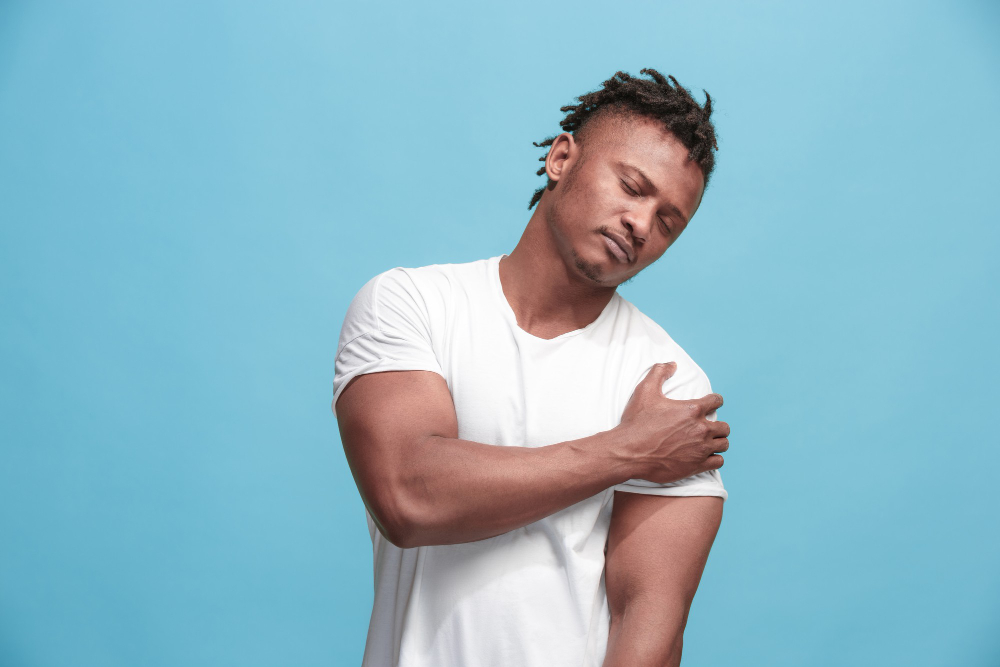
Why Rotator Cuff Injuries Don’t Always Need Surgery — And What to Try First
If you have been diagnosed with a rotator cuff injury in Tempe, AZ, there is a good chance someone has mentioned surgery. And while surgical repair is genuinely necessary in some cases — particularly complete tears in highly active patients — the research tells a more nuanced story: many rotator cuff injuries, including partial tears and tendinopathy, respond very well to non-surgical care. Understanding your options before committing to an invasive procedure could save you months of post-surgical rehabilitation, significant expense, and unnecessary risk.
How Common Are Rotator Cuff Injuries?
Rotator cuff problems are among the most prevalent shoulder conditions in the country. According to the American Academy of Orthopaedic Surgeons (AAOS), nearly 2 million people in the United States visit a doctor for rotator cuff problems each year. Tears can be classified as partial (the tendon is damaged but not completely severed) or full-thickness (a complete tear through the tendon). Importantly, the AAOS also notes that many individuals with rotator cuff tears — particularly partial tears — have no symptoms at all, underscoring that structural findings on imaging do not always dictate the treatment path.
The rotator cuff is made up of four muscles — the supraspinatus, infraspinatus, teres minor, and subscapularis — and their tendons, which form a sleeve around the shoulder joint. Injuries arise from a combination of acute trauma (a fall or sudden heavy lift), repetitive overhead activity, and age-related degeneration. Athletes in throwing sports, swimmers, tennis players, and CrossFit athletes are particularly vulnerable, but rotator cuff injuries are common in non-athletes as well.
What Does the Research Say About Non-Surgical Treatment?
The evidence for conservative management of rotator cuff injuries is substantial. A landmark study published in the British Medical Journal (BMJ) found that for patients with degenerative rotator cuff tears, exercise-based rehabilitation produced outcomes equivalent to surgical repair at one year and two years of follow-up. The study concluded that surgery should not be the default first-line treatment for this population.
Additional research published in the Journal of Orthopaedic & Sports Physical Therapy (JOSPT) has consistently demonstrated that multimodal conservative care — combining manual therapy, targeted exercise, and advanced soft tissue techniques — produces clinically significant improvements in pain, function, and range of motion for rotator cuff conditions. The key is access to the right combination of treatments, applied in the right sequence.
The Non-Surgical Approach at Sports Docs Family Chiro
At Sports Docs Family Chiro in Tempe, AZ, Dr. Porman’s rotator cuff injury treatment draws on a multi-modal toolkit that addresses the condition at every level — from cellular inflammation to neuromuscular re-education. The specific therapies used depend on your diagnosis, severity, and goals, but typically include:
- Targeted Frequency Therapy (TFT) — reduces inflammation and stimulates cellular repair at the tissue level, including within degenerated or partially torn tendons
- SoundWave Therapy — delivers focused acoustic energy to stimulate the body’s regenerative response, directing stem cells and growth factors toward damaged shoulder tissue
- Class 4 Laser Therapy — penetrates deep into the shoulder joint to accelerate tissue healing and reduce chronic inflammation
- Dry Needling — releases trigger points in the rotator cuff and surrounding muscles, improving blood flow and reducing pain referral patterns
- Chiropractic Adjustments — restores proper glenohumeral, acromioclavicular, and cervicothoracic mechanics where joint dysfunction is contributing to shoulder loading
- Progressive Rehabilitation — systematically rebuilds rotator cuff strength, scapular stability, and shoulder kinematic patterns to prevent recurrence
When Is Surgery Necessary?
Non-surgical care is not appropriate for every rotator cuff presentation. Complete full-thickness tears in young, active patients — particularly those who place significant overhead demands on the shoulder — may ultimately require surgical repair to restore full structural integrity. Dr. Porman’s approach is to give conservative care a genuine, thorough opportunity to succeed before surgical referral is considered. If non-surgical treatment has been pursued diligently and the patient is still not achieving functional goals, surgery may then be the appropriate next step and a referral will be coordinated accordingly.
Do Not Wait to Seek Care
One of the most important things to understand about rotator cuff injuries is that they do not improve with benign neglect. Partial tears can progress to full tears. Tendinitis can evolve into tendinosis. Compensatory movement patterns that develop around a painful shoulder can create secondary problems in the neck, elbow, and upper back. Early, expert intervention — the kind available at Sports Docs Family Chiro in Tempe — gives you the best possible chance at a full, non-surgical recovery.
If you are dealing with shoulder pain in Tempe, AZ, call us at (480) 812-9000 or request an appointment online to discuss your options with Dr. Porman.

Ready to Move Better, Feel Better & Perform Better?
At Sports Docs Family Chiro in Tempe, AZ , Dr. Porman and his team are ready to help you find lasting relief from pain and get back to the life and sport you love. Whether you are an athlete recovering from injury or an individual seeking better health, personalized care is just one appointment away.
© 2026 Sports Docs Family Chiro. All rights reserved.


